Herodian Era Heritage: Archaeologists Uncover Monumental Aristocratic Tombs in Jericho
Researchers have discovered three unique 2,000-year-old burial complexes featuring sarcophagi and rare fabrics near ancient Jericho.
 🏙️City
Photo: UNIAN
Key points
- Three rock-cut tombs approximately 2,000 years old were discovered.
- Unique samples of ancient textiles and wooden coffins were recovered.
- The burials belonged to Jerusalem's aristocracy from the time of Herod the Great.
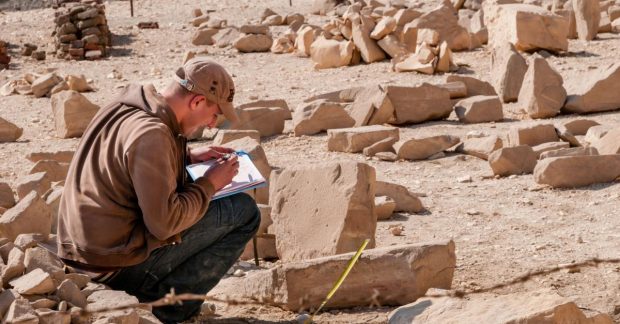
A joint archaeological mission from the Sapienza University of Rome and the Palestinian Ministry of Antiquities and Tourism has announced a significant discovery near the historic site of ancient Jericho. Researchers unearthed three monumental tombs dating back to the Hasmonean and Herodian periods. These findings offer a rare glimpse into the lifestyle and funerary rites of the Judean elite at the turn of the era.
The burial structures were carved directly into the limestone bedrock at the foot of the Mount of Temptation. Each tomb features a sophisticated architectural layout, with burial niches radiating from a central chamber. Although centuries of erosion have damaged the exterior, archaeologists managed to identify fragments of the grand facades that once marked the entrances to these family vaults.
Artifacts and Cultural Evolution
Inside the chambers, the team discovered not only limestone sarcophagi but also wooden coffins and fragments of ancient textiles. The preservation of organic materials like wood and fabric is exceptionally rare in the region’s climate and holds immense scientific value. These artifacts document a shift in social customs: while wooden coffins were prevalent until approximately 6 AD, wealthy families later transitioned to using elaborately decorated limestone sarcophagi.
The scale of the complexes suggests they belonged to high-ranking aristocracy. During this era, Jericho was the second most important city in Judea after Jerusalem. Its mild winter climate made it a preferred location for royal winter palaces, while its lucrative date plantations and balsam production fueled the wealth of the local nobility.
Scientific Significance
Lorenzo Nigro, the head of the archaeological mission, noted that these sites provide a physical link to the families described by the ancient historian Flavius Josephus. "The analysis of remains, coffins, and fabrics can significantly broaden our knowledge of these communities," the professor stated. Currently, detailed laboratory examinations of the recovered items are underway to determine the exact identity and origins of those interred.
Source UNIAN — unian.ua/science/u-palestini-viyavili-grobnici-epohi-iroda-shcho-zd… ↗
Read next
 🎭Culture & Sport
Autumn Rose Care: Tips for Gardeners in Pereiaslav
Experts explain why it is best to avoid radical pruning of roses until persistent frosts arrive.
 🛡️Security
Strike on Russian vessel in Gulf of Finland: Estonia's response
Estonian officials have commented on the incident involving a Russian cargo ship, reaffirming Ukraine's right to self-defense.
 🛡️Security
Rescue operation in Dymer: 89-year-old woman pulled from the rubble of a destroyed building
In Dymer, Kyiv region, search and rescue efforts continue following a drone strike. Rescuers managed to save an 89-year-old woman, though the death toll has risen to nine…
 🇺🇦Ukraine
Russian corvette 'Merkury' damaged in Libya: potential Ukrainian drone strike
A Russian naval vessel was damaged in Benghazi, Libya, following an explosion. Media reports suggest Ukrainian maritime drones may be responsible.
 🛡️Security
Russia tests NATO defense algorithms through airspace violations, expert says
Retired Ukrainian Colonel Dmytro Kashchenko stated that Russian missile and drone incursions into NATO territory are deliberate tests of Alliance response systems.
 💼Economy
Scientists revive 40,000-year-old bacteria from permafrost: climate concerns
Researchers from the University of Colorado found that ancient microorganisms can rapidly reactivate, posing significant risks to the global climate.